
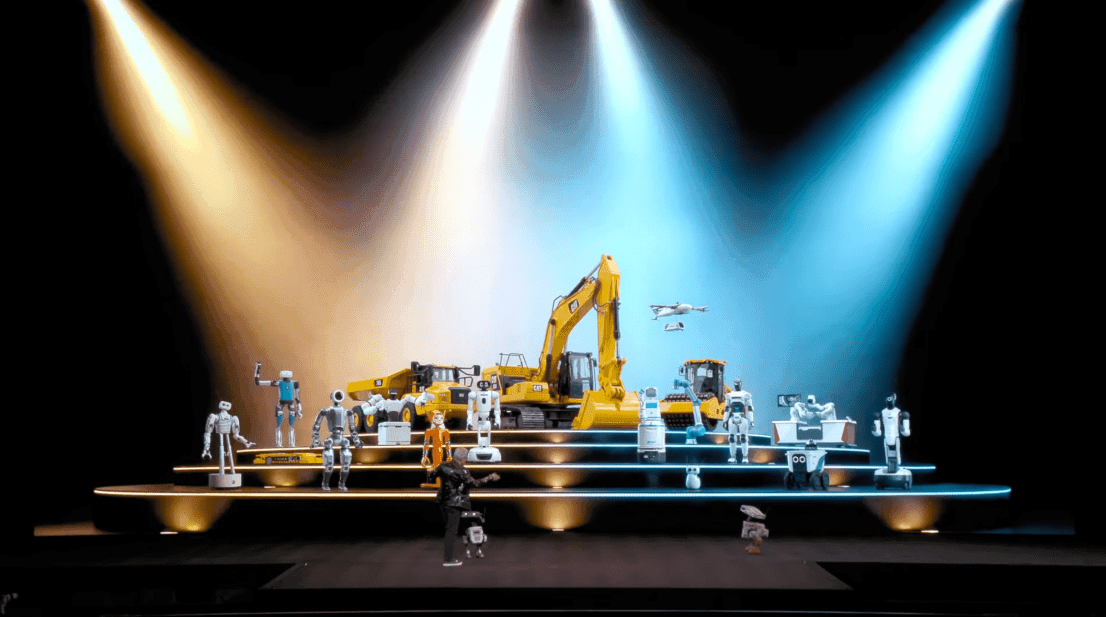
For many years, robots have been very good at doing one thing. Some weld cars. Some move boxes. Some clean floors. Each robot usually does only one job, in one place, in one way. If the job changes, the robot often cannot adapt.
Nvidia wants to change that. The company now says it wants to become the Android of generalist robotics. That means Nvidia wants to build the main platform that powers many kinds of robots, just like Android powers many kinds of smartphones.
This idea is simple to understand. Android did not build every phone. Instead, it gave phone makers a common system to build on. Nvidia wants to do the same for robots.
This post explains what that means, why it matters, and how Nvidia plans to do it, using very simple words.
What is generalist robotics
A generalist robot is a robot that can do many tasks, not just one.
Instead of only lifting boxes, a generalist robot could lift, walk, grab, move, and adjust to new situations. It could work in a factory today and a warehouse tomorrow. It could learn new tasks without being fully rebuilt.
This is different from older robots, which were built for one job and one job only.
Generalist robotics is hard because the real world is messy. Objects move. People get in the way. Lighting changes. Floors are uneven. Robots need to see, think, and decide in real time.
That is where AI comes in.
Why Nvidia is focusing on robots now
Nvidia is famous for making chips, especially chips used for AI. For years, most AI lived in the cloud, inside big data centers. Now AI is moving into the physical world.
Robots, machines, and devices are starting to think on their own. Sensors are cheaper. Chips are faster. AI models are smarter. All these things make robots more capable than ever before. Nvidia sees this shift clearly. Instead of only selling chips, it wants to sell the full system that makes robots smart.
This includes software, AI models, tools for training, and hardware that runs inside the robot. The Android comparison explained simply Android became popular because it solved many problems at once.
It gave phone makers a ready made system. It gave app developers one place to build apps. It allowed many companies to innovate without starting from zero.
Nvidia wants to do the same for robotics.
It wants to create a base platform that robot makers can use. This platform handles vision, movement, thinking, and learning. Companies can then build different robots on top of it. If Nvidia succeeds, many robots in the future could share the same core brain, even if they look very different.
The role of AI models in Nvidia’s plan
At the heart of Nvidia’s robotics plan are AI models. These models help robots understand the world, plan actions, and learn from experience. Nvidia has released several open models that developers can use. These models help robots see objects, understand language, and decide how to move.
One key idea is that robots should not be trained only in the real world. That is slow and risky. Instead, they can be trained in simulation first. In simulation, robots can fail thousands of times without breaking anything. They can learn faster and safer.
Why simulation matters so much
Testing robots in real life is expensive. A robot can fall, crash, or damage equipment. Each test takes time and money. Simulation solves this problem.
Nvidia provides tools that let developers create virtual worlds where robots can practice tasks. These worlds can look very real. Robots can learn how to grab objects, walk, and react before ever touching the real world. Once the robot performs well in simulation, it can move to real life with fewer risks.
This is a big reason Nvidia’s platform is attractive to companies. Hardware that runs inside the robot
Robots need to think fast. They cannot always rely on the cloud. Internet connections can be slow or unavailable.
Nvidia builds special hardware that runs inside robots. These chips are powerful but also energy efficient. They allow robots to process data, run AI models, and make decisions on the spot. This makes robots more independent and more useful in real settings. Open tools and partnerships Another important part of Nvidia’s strategy is openness.
Nvidia is working with platforms like Hugging Face, where developers share AI models and tools. This makes robotics development easier for more people. Developers do not need deep robotics knowledge to start experimenting. They can use existing tools, models, and examples.
This approach attracts a large community. A large community leads to more ideas, faster improvement, and wider adoption.
Why this matters for the future of work and life
If generalist robots become common, many industries could change. Warehouses could use flexible robots instead of fixed machines. Hospitals could use robots to assist staff. Factories could adapt faster to new products.
This does not happen overnight. Robots are still learning. They are not perfect. But the direction is clear. Nvidia wants to provide the foundation that makes this future possible. Challenges Nvidia still faces This vision is ambitious. Robotics is harder than smartphones. The physical world is unpredictable. Safety is critical.
Also, other companies are working on similar ideas. Competition is strong. For Nvidia to truly become the Android of robotics, it must prove that its platform works well in real life, not just demos. It must also keep the platform open enough to attract developers while still building a strong business.
Final thoughts
Nvidia wants to be the Android of generalist robotics because it sees where technology is going.
AI is leaving the screen and entering the real world. Robots need brains, not just motors. They need systems that help them learn, adapt, and grow. By building a full platform that combines AI models, simulation tools, and hardware, Nvidia hopes to become the base layer for future robots.
If it succeeds, many robots in the next decade may share a common foundation, just like phones today share Android. This is not just about robots. It is about how machines learn to live and work alongside humans.
And Nvidia wants to be at the center of it all.
Also Read: Alpamayo Is Not a Condiment, but a Whole New Family of Open Source AI Models
